
No Fremont 24 Hour Feed
The Fremont County Sheriff publishes no official adult booking roster, 24-hour release view, recent-release archive, or booking-photo gallery. The county site map, Sheriff page, directory, and official-domain searches were checked during the research sweep. There is no public cadence, retention window, field list, or photo behavior to describe. Any page that appears to show a Fremont release feed should not be treated as the county’s official list.
This absence changes the task. A person who wants a same-day answer must check one identified person or ask the county for existing records in a defined period. Fremont County VINE supplies timely custody events. Jail staff can clarify whether the event was community release or transfer. A written booking and release record can preserve the operational facts. The court file can then explain the legal order behind bond, dismissal, probation, time served, or another disposition.
Check Fremont Releases Today
Use the same-day sequence in this order. It begins with the fastest official signal, then adds stronger records. Keep the person’s full name, date of birth if known, and approximate booking date close at hand so that staff and search systems can distinguish people with similar names.
- Open the county’s VINE page or the direct Idaho person search and locate the person.
- Match the agency and any available identifier before reading the custody status.
- Call Fremont County Jail at 208-624-4482 and ask whether the named booking ended in release or transfer.
- If a written answer is needed, submit a focused request through Fremont County JustFOIA.
- Review Idaho iCourt for the bond order, dismissal, judgment, sentence, or later custody order.
Administrative hours for the Sheriff’s Office are Monday through Friday, 8 a.m. to 5 p.m. Those hours do not establish when releases occur. Research found no official local release schedule, weekend process, exit door, family waiting rule, or property-return procedure. Outside administrative hours, preserve the VINE event and follow up with the jail and records portal rather than filling those gaps with assumptions.
Fremont Release Record Fields
Because no public list exists, the fields below are request targets. They are not a promise that each item exists in one database or is disclosable in every case. A narrow request tied to one booking is more precise than asking for all information about a person.
| Requested field | Why it matters |
|---|---|
| Full name and identifiers | Distinguishes the correct person from a similar name. |
| Booking number and agency | Connects the answer to one custody episode. |
| Booking date and time | Marks when county jail custody began. |
| Release date and time | Marks when that booking ended. |
| Release type or disposition | May distinguish bond, time served, probation, dismissal, or another basis. |
| Transfer agency or destination | Shows when custody changed hands instead of ending. |
| Charges, bond, and court disposition | Provides context that should be checked against the court case. |
Fremont posts no special release-record fee, retention rule, or guaranteed turnaround. Idaho public-record guidance permits a specific written request and allows response times that depend in part on residency. Request electronic delivery and let the custodian identify any fee or exemption that actually applies.
Request Same-Day Fremont Records
In JustFOIA, select the Sheriff or the closest available record type. Describe the booking episode and the date range. Useful wording is: “Fremont County Jail booking and release record for the person name and date of birth if known, for the booking number or date range, including booking time, release time, release disposition or type, transfer destination, charges, and bond disposition.” Ask for an electronic copy.
If the goal is to identify all releases during one day, request existing release records for an exact start and end time. Do not ask the county to create a “24-hour list” that it does not maintain. A custodian may provide responsive existing records, narrow an unclear request, or explain that no record matches the terms. The response may also omit information that is restricted, sealed, juvenile, or subject to a valid investigatory exemption.
For one named person, the full search and records path on the Fremont County released inmates home page helps distinguish county, state, court, and federal sources. That distinction matters when the person was never held under a county-only case.
Fremont Release or Transfer?
“Release” means departure from a named custodian. It does not always mean unrestricted freedom or completion of a sentence. Someone may leave Fremont County Jail on bond, pretrial release, time served, probation, dismissal, or another court-approved basis. The same person might instead transfer to the Idaho Department of Correction, another county, the United States Marshals Service, or immigration custody.
St. Anthony Work Camp makes this distinction especially important. SAWC is an IDOC state correctional work camp in the same city, not an extension of the county jail. If a jail event is followed by an IDOC result showing “In custody” at SAWC, the sequence supports a transfer, not community release. A move later to Idaho Falls Community Reentry Center also remains IDOC custody even when the resident has approved activity outside the facility.
For state jurisdiction, the IDOC search uses statuses such as In custody, In community, Active Bench Warrant, Discharged with a date, and Deported. “In community” with a Released to Supervision date can support placement on parole or felony probation. “Discharged” supports satisfaction of the IDOC sentence. Neither substitutes for the exact release time from a prior Fremont jail booking.
Fremont Pretrial Release Terms
Fremont County Probation Services supervises some people whom courts release before conviction. This local pretrial layer means a person may leave the jail yet remain bound by a court order and reporting terms. The iCourt register of actions can identify the bond or pretrial order, while the jail record supplies the operational time and type of release. County Probation can address supervision assigned by the local court.
A bond release is not an acquittal or completed sentence. The case continues. Fremont County’s domestic-violence information also explains that some releases carry no-contact conditions. A person arrested for violating a no-contact order may need to appear before a judge before bonding out. Read the actual order rather than infer terms from a custody alert.
This is why three records can answer three different questions. VINE signals that custody changed. The jail record states how that booking ended. The court order states the legal authority and any terms. When those records disagree, the originating jail and court are better sources than a stale copied status.
VINE Is Not an Archive
Fremont County promotes VINE as its main online custody-notification channel. The system communicates with participating jail and prison booking data and can provide release, transfer, escape, and court-appearance alerts. It is available online and through phone, text, or email options. That makes it useful for a current event, but it does not turn the county site into a browsable list of everyone released today.
After opening a person’s record, read the reporting agency and current status. Save enough information to identify the event, then call the jail. A notification can arrive near the custody change while the detailed operational record still needs confirmation. If the receiving custodian is IDOC, use the state Resident/Client Search. If federal custody is plausible, use the Bureau of Prisons locator or the federal court docket. VINE does not replace BOP or ICE systems.
The Fremont County Sheriff page shows the county’s official jail contact route and the absence of a public release-feed link.
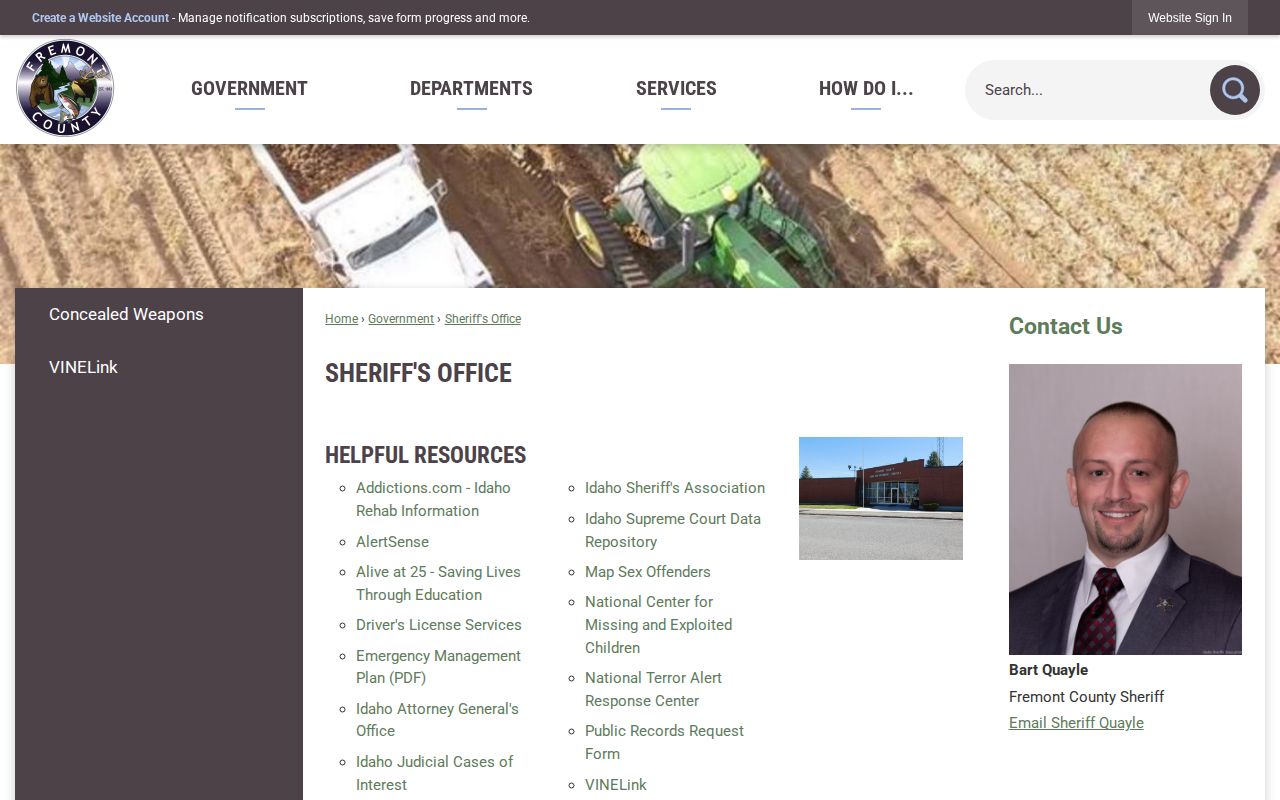
The screenshot helps identify the proper county source, but it does not prove any person’s release.
Widen the Fremont Window
A same-day inquiry can miss an event near the selected cutoff, a late-entered record, or a booking that crosses midnight. The Fremont County 72 hour release list guide explains how to frame an existing-record request for a broader date range. Neither window is an official online Fremont feed.
Use the 24-hour workflow when speed and one recent event matter most. Use the wider period when checking several calendar days, a weekend, or an uncertain release date. In both cases, state the exact start and end time, request existing records, and verify whether the event was community release or transfer. A lack of a matching public result is not proof that release occurred, that no booking existed, or that the person was never moved to a different system.